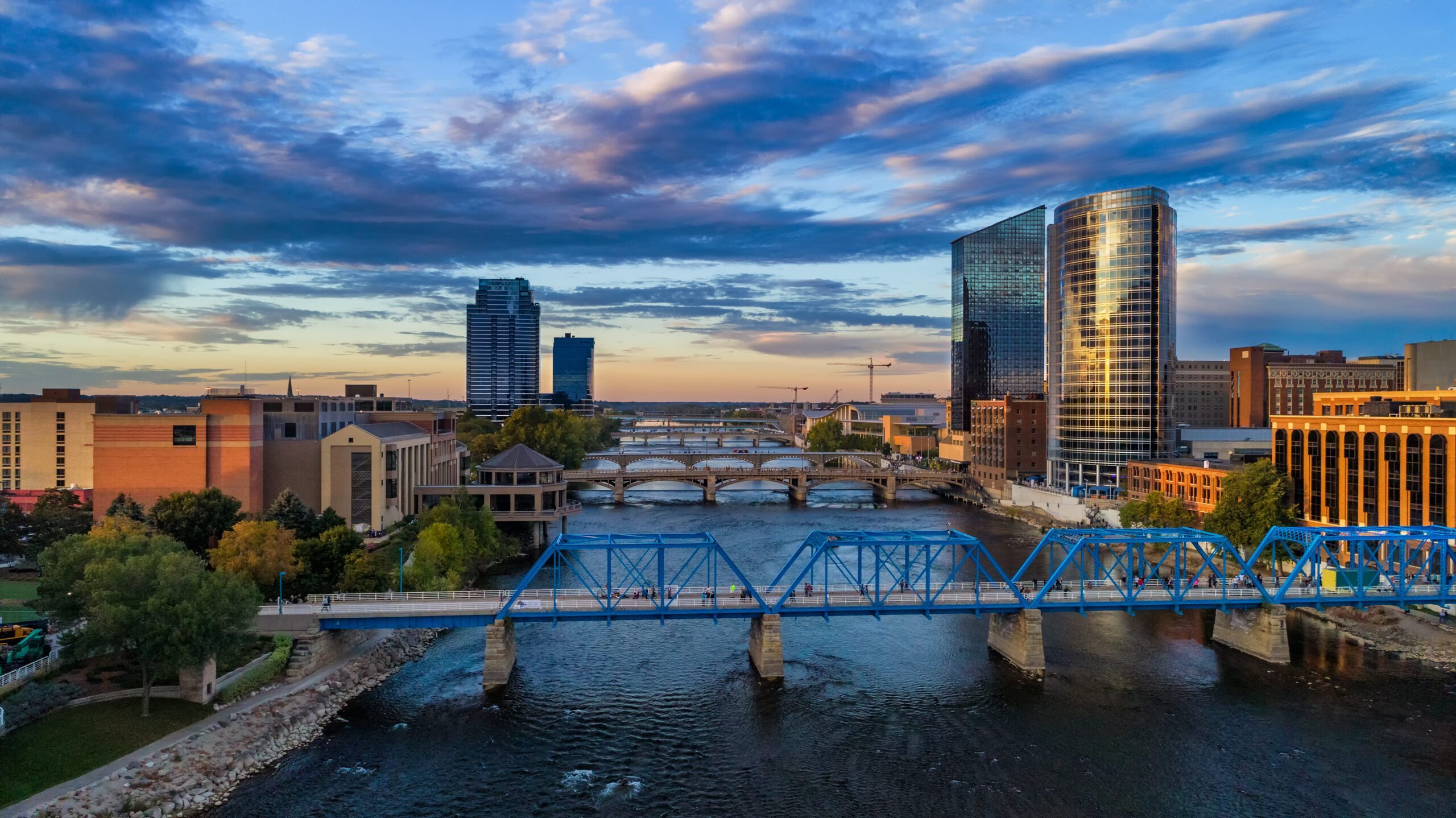
Owosso is the seat of Shiawassee County, sitting where M-21 and M-52 cross along the Shiawassee River between Flint and Lansing. It is a small, self-contained market built around county government, agricultural service businesses, and a downtown that has held onto more of its original commercial building stock than many towns its size.
Curwood Castle, the writer's studio built along the riverbank in the 1920s, still draws visitors downtown, but the city's underlying commercial base is agricultural service and county administration, not tourism, and an exchange buyer should underwrite Owosso property on that basis.
A County-Seat Market Anchored by Government and Agriculture
The Shiawassee County courthouse and administrative offices sit downtown and keep a steady base of office and legal-service tenants near Main Street and Water Street. Outside that core, the local economy runs on agricultural supply and service businesses that support the surrounding farmland, which shows up in demand for small industrial and warehouse space along the rail corridors that cross the city.
Owosso's population has held roughly steady for decades rather than grown, so most exchange activity here involves existing buildings changing hands rather than new construction absorbing demand.
Property Types That Move Through Exchanges Here
- county-seat office and legal-service space near the courthouse
- agricultural supply and light-manufacturing buildings along the rail lines
- downtown mixed-use buildings with ground-floor retail on Main and Washington Streets
- small multifamily and duplex product in the neighborhoods surrounding downtown
Financing Realities in a Small Rural Market
Transaction volume in Owosso is low enough that appraisers and lenders often have to pull comparable sales from Corunna, St. Johns, or Durand rather than from Owosso alone. That can slow underwriting on a replacement property here, so we start the appraisal conversation early in the 45-day identification window rather than waiting until a purchase agreement is signed.
Where Owosso Fits in a Statewide Search
When local listings cannot carry a full replacement search on their own, Lansing offers a much deeper bench of office and government-adjacent product about thirty minutes southwest, and Flint offers industrial and multifamily volume to the east. Both sit close enough to Owosso that a single exchange search can reasonably cover all three without stretching due diligence past what the 180-day closing window allows.
Diligence Notes Specific to This Market
Several downtown Owosso buildings sit inside the city's historic district around Main Street, where exterior changes require review before permits are issued. Parcels near the Shiawassee River, including several older industrial sites on the city's east side, should have flood-zone status confirmed with Shiawassee County before closing, since the river has flooded portions of downtown in past decades. Buildings that once served agricultural or light-manufacturing tenants along the rail corridor warrant a Phase I environmental review given the length of that industrial use.
Owosso Deadline Control Plan
Owosso should be reviewed with the sale closing date, the 45 day identification deadline, the 180 day acquisition deadline, debt replacement needs, and advisor questions visible in the same working file. For this replacement market, the active facts include county-seat office and legal-service space near the courthouse, agricultural supply and light-manufacturing buildings along the rail lines, downtown mixed-use buildings with ground-floor retail on Main and Washington Streets, small multifamily and duplex product in the neighborhoods surrounding downtown. Those details affect whether a candidate belongs on the written identification list, whether it should remain a backup, or whether it needs to be removed before the investor relies on it.
The Michigan exchange plan should also document why Owosso is being considered instead of a broader market label. The file should separate property fit, seller cooperation, lender timing, title review, inspection access, and closing certainty so the qualified intermediary, CPA, attorney, broker, and lender are not working from different assumptions after identification.
Common 1031 Exchange Questions
Is there enough transaction volume in Owosso to support a full replacement-property search on its own?
Usually not for every property type. Downtown office and retail turn over often enough locally, but for industrial or multifamily we typically widen the search to Corunna, St. Johns, and Durand from the start so you have real candidates beyond what Owosso itself has listed.
How does the Shiawassee County courthouse affect demand for downtown Owosso office space?
It anchors a steady base of legal and title-service tenants near Main Street, which keeps that small downtown office segment more stable than the rest of the local market, though the segment itself is small enough that a single vacancy can shift pricing noticeably.
What should I check before including a Shiawassee River-adjacent property in my identification package?
Confirm flood-zone status with Shiawassee County directly, since parts of downtown near the river have flooded in prior decades, and factor any required flood insurance into your underwriting before you name the property as a candidate.
Should I expect appraisal delays on an Owosso replacement property?
Possibly, since low local transaction volume sometimes forces appraisers to pull comparables from nearby Corunna or Durand rather than Owosso sales alone. We flag that risk early and start the appraisal request as soon as a candidate property is identified rather than after a purchase agreement is signed.
Are there restrictions on renovating a downtown Owosso building I buy through an exchange?
Buildings along Main Street inside the historic district go through design review for exterior work before permits are issued. We confirm that timeline against your repositioning plan before you name the property to your intermediary.
Does the agricultural economy around Owosso make industrial property here a stable exchange candidate?
Generally yes for buildings that serve grain handling, farm equipment, or agricultural supply tenants, since that demand is tied to the surrounding county's farmland rather than to any single large employer. We still confirm current lease terms and tenant financials directly rather than assuming the sector's overall stability applies to any one building.