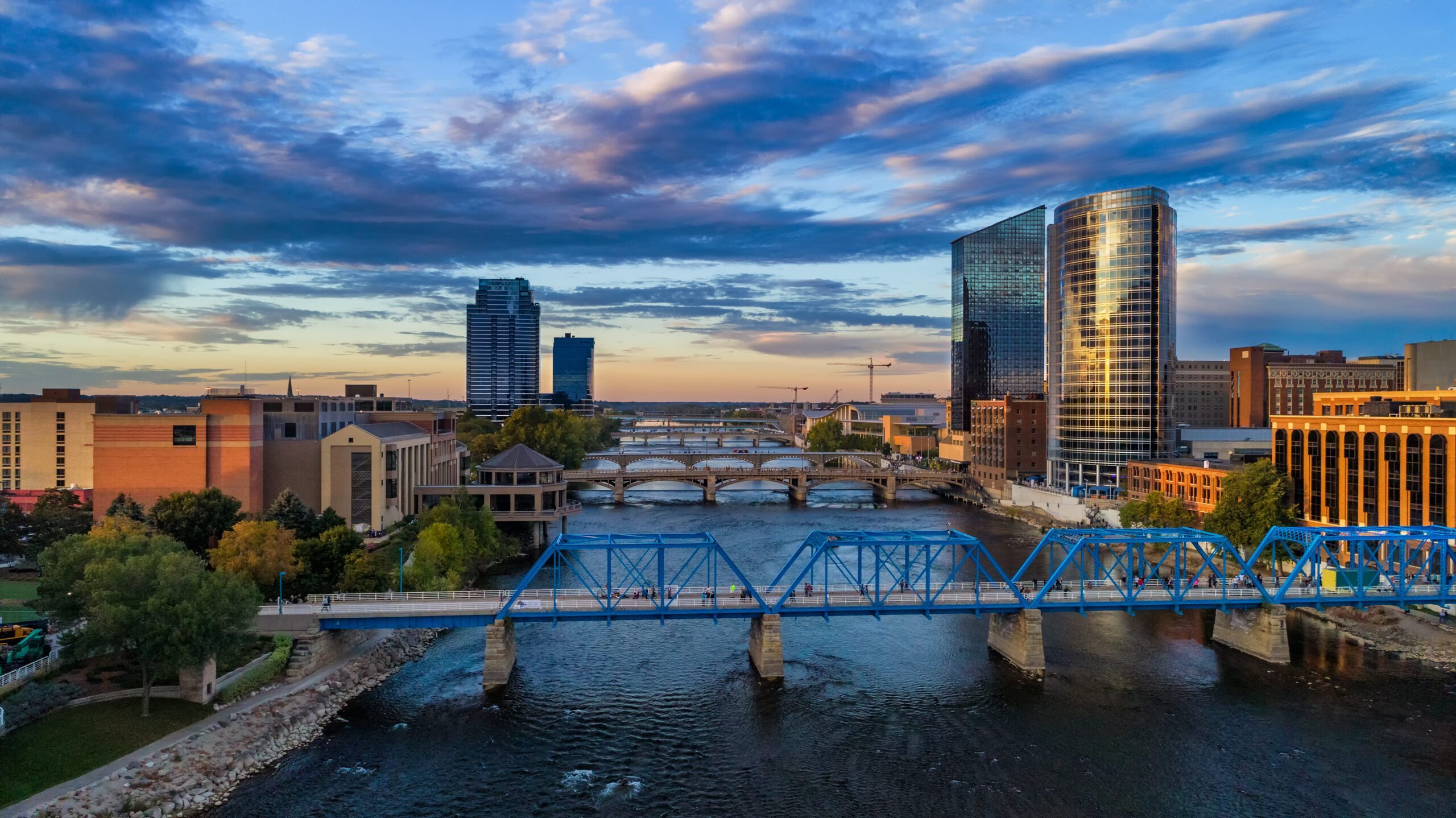
Grand Rapids runs on a different set of industries than the Detroit side of the state, and an exchange buyer who assumes West Michigan pricing tracks Southeast Michigan pricing is usually in for a surprise. Furniture, healthcare, and manufacturing money built this downtown, and that history still shows up in which buildings hold value.
A Downtown Remade by Medicine and Furniture Money
Van Andel Arena and DeVos Place anchor a downtown that has seen consistent reinvestment tied to the Van Andel and DeVos family philanthropy connected to Amway, and that reinvestment extends into the Michigan Street corridor known locally as Medical Mile, home to the Van Andel Institute and Corewell Health's major campus. West Michigan's furniture manufacturing legacy, led by Steelcase here in Grand Rapids and Herman Miller a short drive away in Zeeland, still supports a base of industrial and flex tenants that gives this market a different tenant mix than a comparable Detroit suburb. ArtPrize and the city's growing brewery scene have also added a seasonal boost to downtown retail and hospitality demand that a buyer should treat as a supplement to the core medical and industrial base rather than a substitute for it.
What Trades in a Grand Rapids Exchange
- medical office along and near the Michigan Street corridor
- industrial and manufacturing-adjacent flex space west and south of downtown
- multifamily serving downtown's growing residential population
- retail along 28th Street and other regional corridors
- mixed-use redevelopment in the core near Van Andel Arena
Medical Mile Changes the Office Conversation
Buildings within walking distance of the Michigan Street medical corridor lease at a premium tied to healthcare and life-science tenants, and that premium has been strong enough to pull in institutional buyers who otherwise pay little attention to Grand Rapids. An exchange buyer comparing a Medical Mile property to office space elsewhere in the city should expect a meaningfully different cap rate rather than a simple address premium, since the tenant credit and lease length in that corridor tend to run stronger than a typical suburban medical building.
Industrial Strength West and South of Downtown
Older manufacturing corridors around Wyoming and Kentwood have absorbed logistics and light manufacturing demand as West Michigan's furniture and auto-parts supply chain has modernized, and buildings here tend to trade at a lower basis than comparable Detroit-area industrial while offering similar lease structures. We look closely at ceiling height, dock configuration, and rail access before recommending one of these buildings as a replacement, since older manufacturing buildings converted to modern distribution use sometimes fall short on one of those specifications even when the lease and price look attractive on paper.
West Michigan Backup Markets
Kalamazoo offers a similar university-and-healthcare demand profile at a lower basis, Lansing brings state-government-anchored office into the comparison, and Traverse City is worth considering for an investor open to a smaller, more seasonal market. We use Grand Rapids as the reference point for West Michigan pricing and work outward from there, and we make that reference explicit for out-of-state buyers who otherwise default to comparing every Michigan market against Detroit alone.
Common 1031 Exchange Questions
Why does Grand Rapids office space near Medical Mile cost more than office space elsewhere in the city?
Proximity to the Van Andel Institute and Corewell Health's Michigan Street campus draws healthcare and life-science tenants willing to pay a premium, which has pulled in institutional buyer interest as well. We separate that premium from general downtown pricing when comparing replacement candidates.
How does Grand Rapids industrial pricing compare to Detroit-area industrial?
Buildings around Wyoming and Kentwood generally trade at a lower basis than comparable Detroit-suburb industrial while offering similar lease structures, since West Michigan's manufacturing base has modernized more gradually. We check ceiling height, dock configuration, and rail access before recommending a specific building.
Is Steelcase's presence still relevant to Grand Rapids commercial real estate?
It remains part of the regional industrial and office tenant base, alongside Herman Miller a short drive away in Zeeland, and that furniture-manufacturing legacy still shapes demand for certain flex and industrial product. We factor that history into how we read a building's tenant durability, and we check whether a given tenant's supply relationship to either company is direct or several layers removed before crediting it as a stable anchor.
Should I compare Grand Rapids to Kalamazoo or Lansing for a 1031 exchange?
Yes, both are common comparisons. Kalamazoo offers a similar university-and-healthcare demand profile at a lower basis, while Lansing brings a state-government tenant base into the mix that Grand Rapids doesn't really have, and we typically run both comparisons side by side rather than picking one before seeing the actual numbers.
What should I know about retail along 28th Street in Grand Rapids?
It functions as the region's main retail corridor, drawing traffic from well beyond the immediate neighborhood, similar to how a regional mall corridor works in other metros. We evaluate co-tenancy and actual sales performance there rather than assuming the corridor's overall reputation applies evenly to every parcel, and we treat downtown's ArtPrize and brewery-driven seasonal traffic as a separate factor from the steadier baseline demand along 28th Street, since the two corridors respond to entirely different customer bases and different times of year, and treating them as one undifferentiated downtown market tends to overstate how dependable the seasonal traffic actually is.