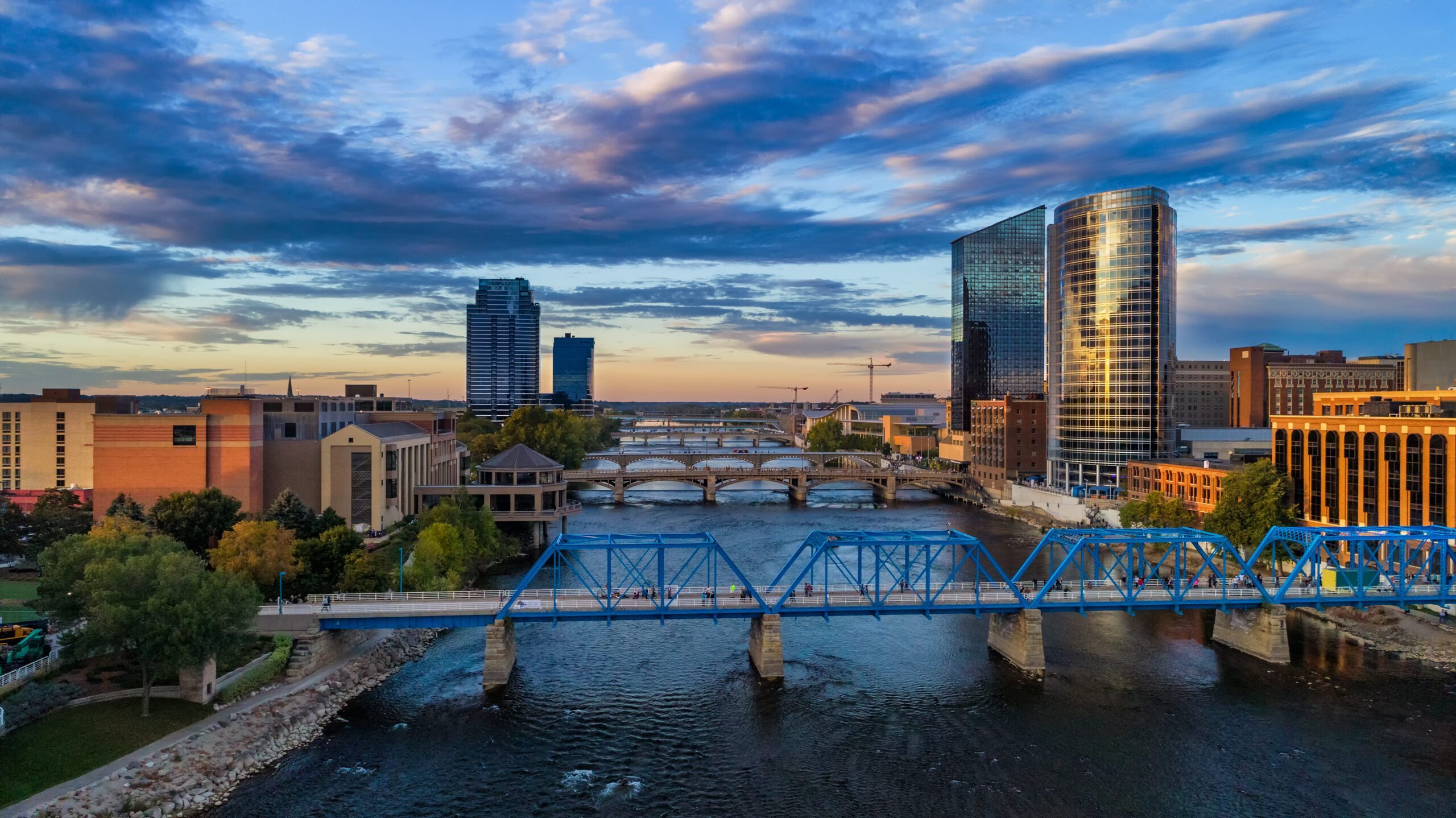
Muskegon built its economy on a deep-water port and a century of lumber and manufacturing, and it is in the middle of a second act built on downtown redevelopment and its Muskegon Lake waterfront. An investor doing a 1031 exchange here is choosing between legacy port and rail industrial, newer mixed-use downtown, and lakefront multifamily, each with a different risk and timing profile.
A Working Port Still Shapes the Industrial Market
Muskegon Lake connects to Lake Michigan and still handles bulk cargo, and the industrial parcels along its shoreline and the rail lines feeding it lease to companies that need water or rail access rather than pure highway logistics. That is a narrower tenant pool than a generic warehouse market, so an exchange buyer underwriting port-adjacent industrial should confirm a tenant's actual use of water or rail access rather than assume it is interchangeable with a Business US-31 distribution box.
Terrace Point and other former industrial sites along the lakeshore have been remediated and redeveloped into mixed residential and commercial use over the last decade, changing what used to be a purely industrial waterfront into a mixed corridor.
Downtown Redevelopment Is Changing the Multifamily and Retail Picture
- new and converted downtown multifamily near Western Avenue and the lakeshore trail
- mixed-use retail and restaurant space in the revitalized downtown core
- port and rail-adjacent industrial along Muskegon Lake
- medical office near Mercy Health's Muskegon campus
- value-add multifamily in older neighborhoods further from downtown
Two Different Basis Levels in the Same City
New downtown and lakefront product prices closer to a West Michigan resort-market rate, driven partly by seasonal demand tied to Pere Marquette Beach and the broader Lake Michigan shoreline, while older industrial and multifamily stock further from the water still trades at a legacy manufacturing-town basis. An out-of-state exchange buyer comparing listings should not assume a single price-per-square-foot benchmark applies across the whole city.
Widening the Search Along the West Michigan Shoreline
Grand Rapids sits roughly forty minutes east along US-131 and offers a much deeper bench of institutional multifamily and office product for a buyer who cannot fill an identification list from Muskegon alone. Holland to the south shares a similar lakeshore-tourism dynamic but with a different anchor industry, which makes it a useful comparison point rather than a direct substitute.
A buyer comfortable with a longer commute to Grand Rapids sometimes finds better cap rates on West Michigan industrial by keeping the search open to both Muskegon and the smaller communities along the US-31 corridor between the two cities.
Diligence Points for Port and Waterfront Parcels
Given the decades of industrial use along Muskegon Lake, environmental history and any prior remediation record should be reviewed carefully on waterfront and near-shore parcels, including confirmation of whether a site sits inside a documented brownfield redevelopment area, since that status can affect both financing and future improvement plans. Flood and lake-level data matter for shoreline property given historical fluctuation in Lake Michigan water levels. Downtown buildings converted from older commercial use sometimes carry unrecorded easements from the rail-spur era that a title search should specifically account for.
Buyers of former lumber-era or foundry parcels should also request any available remediation reports from the city or state rather than relying solely on a private Phase I, since much of the Muskegon Lake cleanup work has been publicly documented over the past two decades.
Common 1031 Exchange Questions
Is port-adjacent industrial in Muskegon a stable 1031 replacement
It can be for a tenant whose operations genuinely depend on water or rail access, but we confirm that dependency directly rather than assuming a lakeshore address alone makes the lease more durable than a standard warehouse tenancy.
How does downtown Muskegon multifamily pricing compare to the rest of the city
New and converted units near the waterfront price closer to a resort-market rate tied to seasonal Lake Michigan demand, while multifamily further from downtown still trades at an older manufacturing-town basis, so the two segments should not be evaluated against the same benchmark.
Should I check brownfield status before identifying a waterfront parcel here
Yes. A meaningful share of Muskegon Lake shoreline has a documented industrial history, and confirming whether a specific parcel sits in a recognized brownfield redevelopment area affects both financing terms and future improvement plans.
Is Muskegon or Holland the better fit if I want lakeshore exposure
It depends on the asset type. Muskegon's port history supports industrial and a growing downtown multifamily base, while Holland's economy centers more on manufacturing headquarters and tourism, so we match the city to the specific property type you are targeting.
How tight is inventory if I need to widen my identification list beyond Muskegon
Institutional-grade multifamily and office product is thinner here than in Grand Rapids, so we typically keep a Grand Rapids alternate on the list from the start rather than waiting to see if the Muskegon search comes up short.