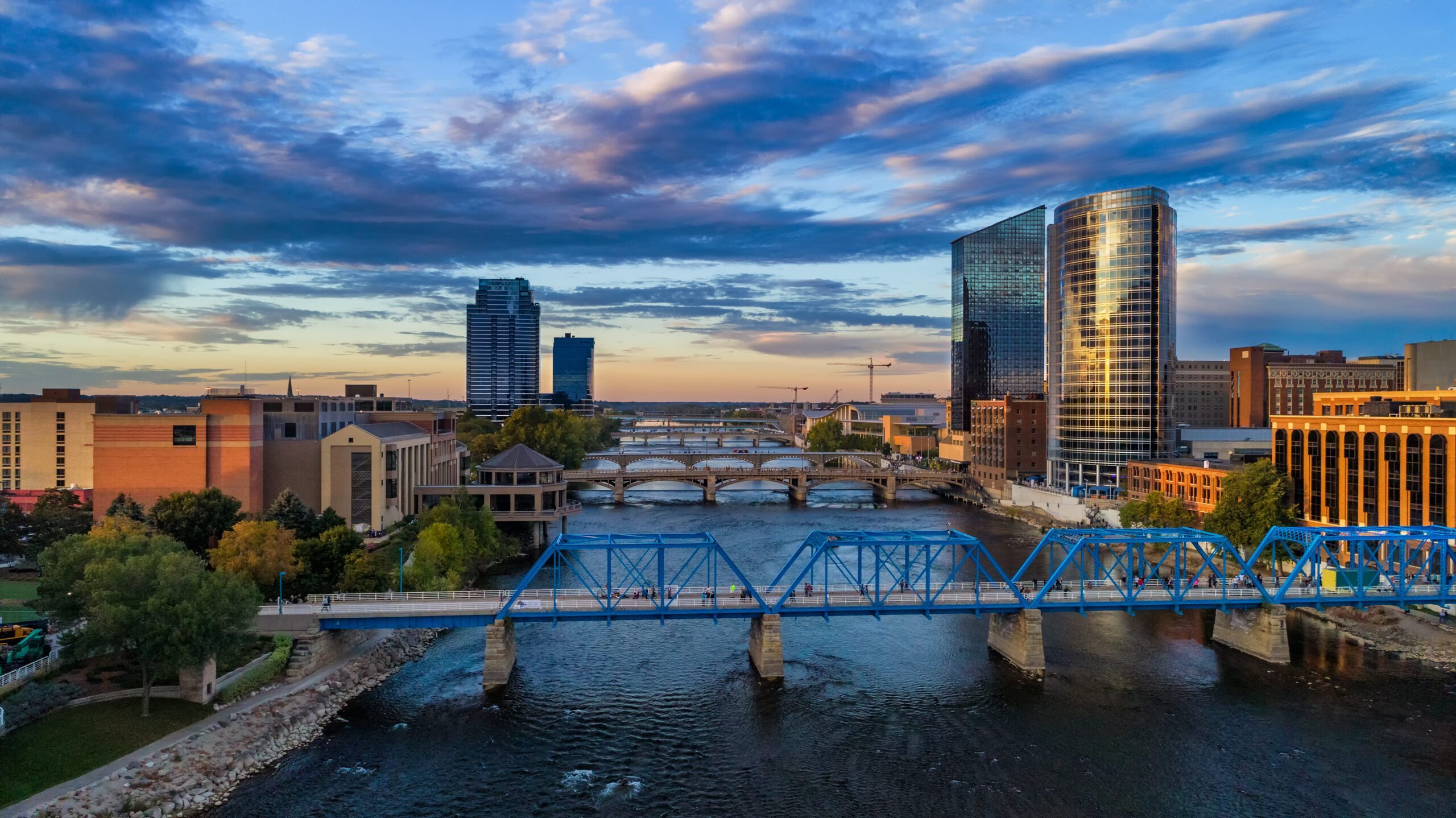
Twenty years of watching 1031 exchanges move across Michigan teaches the same lesson every year: this state doesn't have one property market, it has four or five that happen to share a border, and an exchange that starts in Detroit rarely ends up staying there.
The State's Real Economic Geography
Southeast Michigan runs on the automotive and defense-supplier base that built Detroit, Warren, and the string of Oakland and Macomb County suburbs still trading on that legacy today. Grand Rapids and West Michigan built a different economy around furniture manufacturing, office products, and a diversified industrial base that came through the last two recessions in noticeably better shape than the Detroit region did.
Ann Arbor and Lansing form a university-and-government corridor -- the University of Michigan and Michigan State University drive medical, biotech, and research office demand that behaves nothing like a typical suburban market. Traverse City and the rest of northern Michigan run on tourism, agriculture, and a seasonal calendar that has almost nothing in common with the rest of the state's property economics. An exchange that treats these as one market is going to misprice something.
What a Statewide Search Actually Covers
Because this network covers the whole state, a Michigan-wide identification list can reasonably include:
- industrial and supplier buildings across the Southeast Michigan auto corridor
- manufacturing and distribution space in the Grand Rapids and West Michigan market
- medical and research office near Ann Arbor and Lansing's university anchors
- tourism and hospitality property in the Traverse City region
- agricultural land in the Thumb and southwest Michigan
Very few investors search all five categories at once, but the point of covering the whole state is that a Detroit-area seller who can't find the right replacement locally isn't stuck -- Grand Rapids or Ann Arbor might solve the problem instead.
Why Investors End Up Looking Statewide
The most common reason an exchange broadens beyond a single metro is timing pressure against the 45-day identification window -- a seller in Southeast Michigan who can't find the right industrial or office replacement locally within the first few weeks often widens the search to Grand Rapids or Lansing rather than settling for a weaker local option. A second reason is asset-class specialization; an investor selling agricultural land downstate may find the closest true like-kind replacement is actually near Kalamazoo rather than anywhere near where they originally held property.
A third is simple diversification, when an owner consolidating several smaller Michigan properties wants the replacement spread across more than one regional economy rather than concentrated in one.
Diligence That Changes by Region
Environmental history is the dominant concern in the older Southeast Michigan industrial corridors, given decades of automotive and defense-supplier manufacturing use. Grand Rapids and West Michigan diligence tends to focus more on building age and functional obsolescence in older furniture-industry manufacturing stock. Ann Arbor and Lansing properties require a closer read of university or state-government tenant relationships, since lease structures tied to institutional tenants behave differently than standard commercial leases.
Northern Michigan property needs the seasonal and agricultural-specific diligence -- water rights, trailing-twelve-month income normalized for tourist season -- that doesn't apply anywhere else in the state.
Coordinating a Multi-Region Exchange
A statewide search puts more pressure on coordination than a single-metro exchange, since the qualified intermediary, tax advisor, and any lender involved need to track identification and closing timelines that may span very different regional closing customs and inspection seasons. We recommend naming properties from more than one region on an identification list specifically when the timeline is tight, since a Southeast Michigan industrial building and a Grand Rapids alternative rarely hit the same closing obstacles at the same time.
The 180-day exchange period doesn't change based on how far apart the properties are, so travel and inspection logistics need to be planned for early rather than assumed.
Common 1031 Exchange Questions
Should I limit my 1031 search to one region of Michigan or look statewide?
It depends on how specialized the asset class is and how much local knowledge matters to the property type. Industrial and office exchanges often work fine within a single metro, but agricultural land, hospitality, and other specialized asset classes sometimes have better replacement options in a different region of the state entirely.
Does the qualified intermediary need to be based in the same region as my property?
No, the qualified intermediary's location doesn't need to match the property's region, but they do need to be lined up and ready to receive proceeds before the relinquished property closes, regardless of where in Michigan the transaction is happening.
How does the 200% rule help with a multi-region Michigan search?
The 200% rule lets you identify more properties than the standard three-property limit, as long as their combined value doesn't exceed twice the relinquished property's value, which is useful when spreading an identification list across more than one Michigan region to hedge against regional timing or diligence issues.
Why does diligence differ so much between Southeast Michigan and Grand Rapids or Traverse City?
Each region's property stock carries a different dominant risk -- environmental history in the older automotive and defense-supplier corridors, building age and functional obsolescence in West Michigan's legacy manufacturing stock, and seasonal income normalization in northern Michigan's tourism-driven properties. Applying the same checklist statewide misses what actually matters regionally.
What's the biggest planning mistake in a statewide Michigan exchange?
Treating the 45-day and 180-day clocks the same regardless of region, when inspection seasons, closing customs, and even lender familiarity with the local market can vary significantly between Detroit, Grand Rapids, and northern Michigan. Building in extra lead time for the less-familiar region avoids a lot of last-minute pressure.